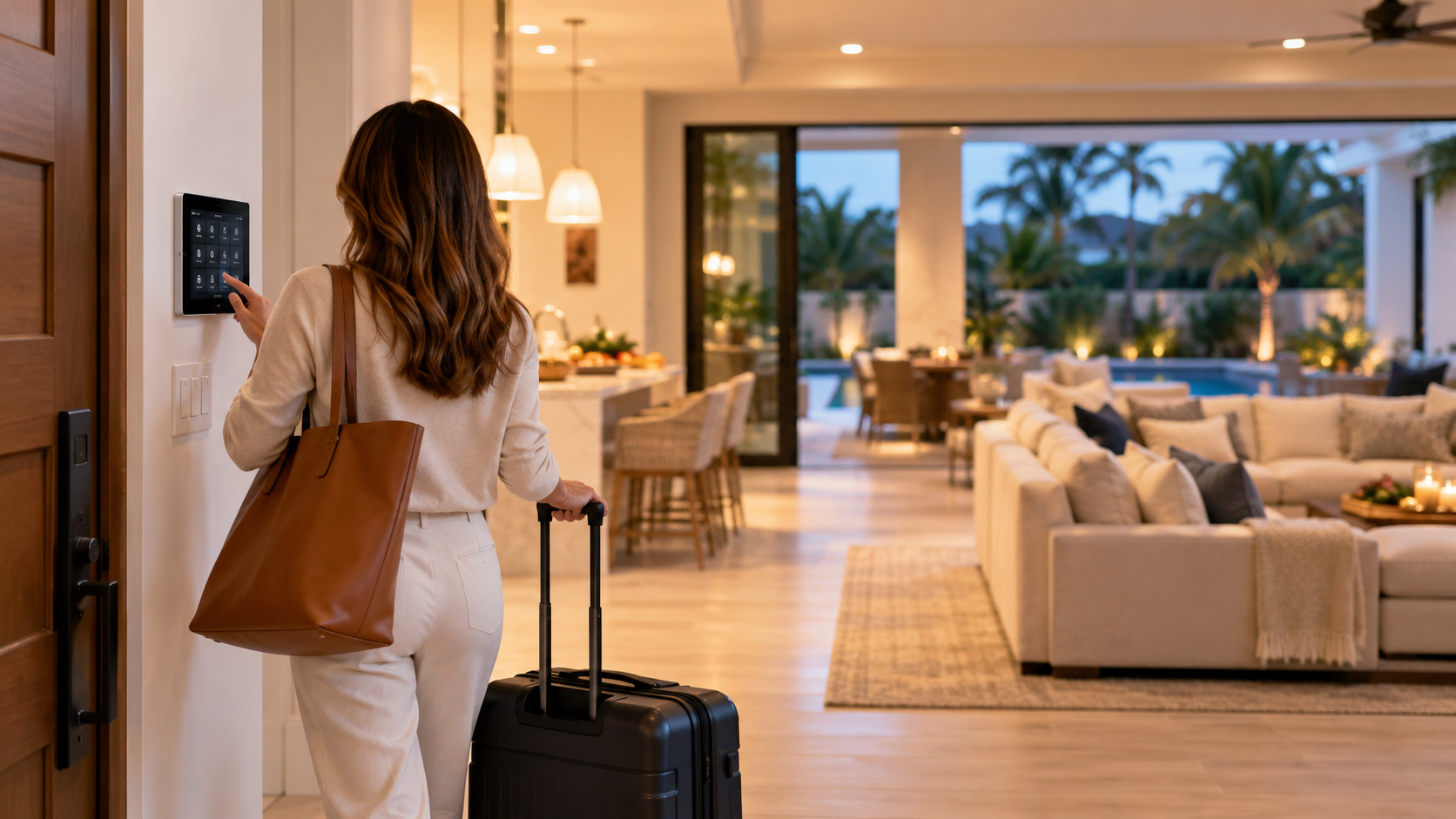
The home technology worth attention before season is the kind that handles three things at once: a full house of guests, time away for the holidays, and sunsets that arrive before most people get home. In practice, that means a network with a separate guest login, controls a visiting relative can use without instructions, a way to see and protect the house while you travel, and lighting that follows the season on its own.
In South Florida, winter is when a home works hardest. Seasonal residents return and open houses that have been quiet since spring. Children and grandchildren arrive for the holidays. Many families also leave for a week or two to visit relatives up north, and the house is suddenly empty in the middle of its busiest season.
We have been designing and caring for home technology here since 1987. After that many years inside our clients' homes, our team has a clear sense of which upgrades still earn their place a few winters later, and which end up unplugged in a drawer.
Is your network ready for a full house?
Holiday guests mean more phones, more streaming and more gaming, all at the same time. A network that feels perfectly adequate for two people can struggle with twelve.
The most useful step is a separate guest network. Guests get a simple name and password to share, and the family's own devices, including cameras, locks and the systems that run the house, stay on a private network that visitors never touch. It is a small change that makes the home both easier to share and more secure.
This is also a good time to look at coverage. Concrete block construction, common across South Florida, is very good at stopping hurricanes and equally good at stopping WiFi. If the guest suite, the pool deck or the far bedroom has always been a weak spot, it will be noticed when the house is full. Access points wired back to the network, rather than more wireless extenders, are usually the lasting answer.
Can your guests actually use the house?
If only one person in the family knows how the lights, thermostat or television work, the system is not finished.
Our designers think about this from the first drawing. A guest should be able to walk into a room and understand the keypad by the wall, turn on the television with one remote and find the right temperature without a tutorial. Engraved keypad buttons that say what they do, a single remote for each room and a simple scene for the guest suite make hosting far less stressful for everyone, including the person who would otherwise be fielding questions all week.
Will you know what is happening while you travel?
A video doorbell and a few well placed cameras let you see who is at the door and keep an eye on holiday deliveries from anywhere. On their own, though, they only tell part of the story.
Pair them with water leak sensors and temperature alerts and one phone can confirm the house is secure, dry and cool while the family is away. In a South Florida home, that matters more than most people expect. An air conditioning problem in an empty house can raise the humidity quickly, and an air handler's drain line is one of the most common sources of leaks our service team sees. Knowing about either within minutes, rather than when you return, is the difference between a service call and a restoration project. We explain more in our guide to homes that respond rather than simply record.
Can your lighting do more than turn on at dusk?
In December, the sun sets around 5:30 in the Palm Beaches, well before many people are home. Lighting schedules that follow the season, rather than a fixed time set back in summer, mean you never arrive to a dark driveway or entry.
While you are away, the same system can move light through the house the way a family would: the kitchen in the early evening, the living room later, the bedrooms at night. A home lit that way looks lived in rather than on a timer. Motorized shades can follow the sun as well, opening in the morning and closing in the evening, which keeps the house private at night and protects floors and furnishings from the afternoon sun.
The same schedules can run holiday lights inside and out, so there is no need for a plug in timer behind every planter.
Should you buy more devices during holiday sales?
It is tempting to fill a cart with smart gadgets during the holidays. Our advice is to buy fewer things that work together.
One system the whole household actually uses is worth far more than five apps nobody remembers to open. Before buying anything, it is worth asking whether it will work with what you already have, who will set it up, and who you will call when it needs an update in two years. The upgrades that last are almost always the ones designed as part of the whole home.
Frequently asked questions
What is a guest WiFi network? A separate network with its own name and password for visitors, kept apart from the devices that run your home, so guests get fast internet without access to your cameras, locks or files.
How can I make my home look occupied while I travel? Use lighting scenes that move through the house the way your family does in the evening, together with shades that open and close with the sun, rather than a single timer.
What should I monitor in a South Florida home while I am away? Water leaks, indoor temperature and humidity, power, and the doors and cameras. Leak sensors at the air handler, water heater and under sinks are the place to start.
Do I need to replace my existing system to add these features? Often not. Many upgrades, such as a guest network, leak sensors or new lighting schedules, build on the system you already have.
If you are opening your home for season or planning to travel over the holidays, our team in West Palm Beach and Vero Beach would be glad to look at what your home needs and what it already does well.