
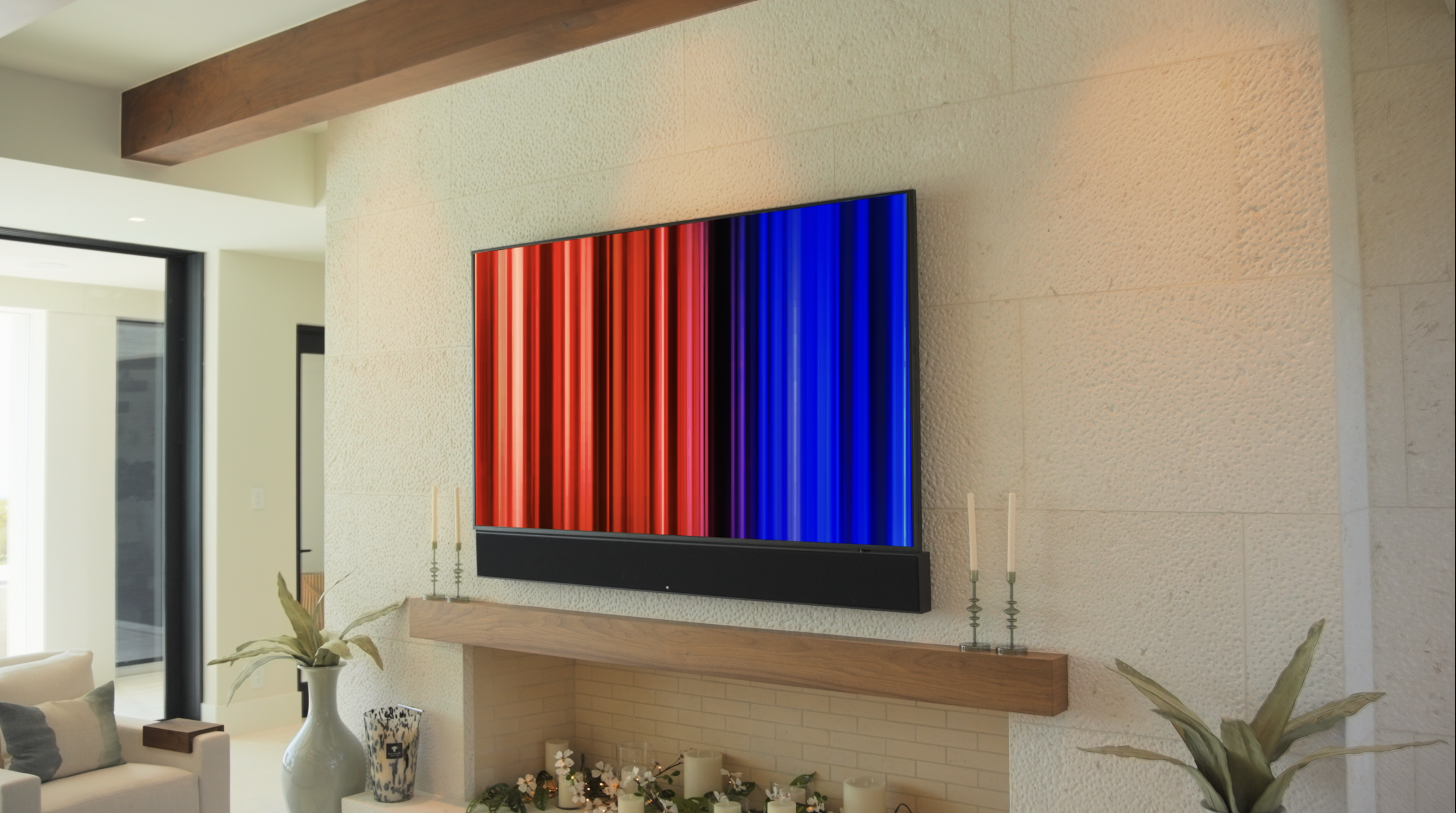
Whole-Home Audio Systems
Listen and watch in any room with consistent controls and equipment kept out of sight whenever possible.
Music in a house should work the way lighting does. You walk into a room and it's there, at the right level, without a decision.
What most homes have instead is a portable speaker in the kitchen, a soundbar in the living room, something in the office, and four different ways to start any of them. The music stops when you move.
A whole-home system is one system. It follows you, or it doesn't — depending on what you want that afternoon.
What a Multi-Room System Does
The same music in the kitchen, patio, and pool, in sync
Different music in different rooms, at the same time
Volume that stays right room to room, without adjustment
Music that starts from a keypad, a phone, or your voice
The primary suite quiet while the great room isn't
Guests who can figure it out without being shown
Speakers Chosen for the Room They're Going In
Ceiling height, room volume, hard surfaces, and where people actually stand determine what a speaker needs to do. A great room with twenty-foot ceilings and stone floors is a different problem than a bedroom.
That's the design work. Selecting the speaker is what happens after it.
We also spend real attention on how speakers look. Trimless, flush, paintable, and fully invisible in-wall options mean a room can sound excellent without a grille becoming part of the ceiling design.
How We Design an Audio System
We map zones to how you live
Kitchen, great room, primary suite, office, lanai, pool, garage. Zones follow the way the house is used, not the way the floor plan is drawn.
We match speaker to room, not room to speaker
Sizing, placement, and count come from the room's dimensions and finishes. Two well-placed speakers often outperform six poorly placed ones.
We coordinate with your designer on what's visible
Ceiling layout, trim, and finish get resolved with the architect and designer, so the speakers land where they should acoustically and where they should visually.
We build it to be simple to run
One app, one keypad, one voice command. If someone has to be taught the system, we designed it wrong.
What a System Includes
Zone planning across interior and exterior spaces
Speaker selection, layout, and aiming
Amplification and distribution sized for all zones running at once
Streaming service integration for the services you already use
Keypad, touchscreen, app, and voice control
Integration with lighting, shades, and whole-home control
Outdoor and landscape audio built for the climate
New Construction and Existing Homes
If you're building, speaker locations belong on the reflected ceiling plan alongside lighting. That's how you avoid a can light and a speaker competing for the same eighteen inches.
If the home is finished, retrofit in-ceiling and in-wall speakers install cleanly in most construction. Wireless zone options cover rooms where running cable isn't practical.
Common Questions about home Audio
-
No. Most homes do well with six to ten zones covering the spaces people actually use. Bedrooms and baths are optional and often skipped.
-
Only as much as you want. Trimless and paintable options disappear into a ceiling, and fully invisible in-wall speakers finish flush under drywall.
-
Yes. The system uses the services you already have. Nothing changes about how you find music.
-
Yes. That's the point of a zoned system. Each zone is independent, and any group of them can be linked.
-
They're part of the same system. Landscape and patio audio share zones and control with the interior.
Where We Work
Designed and installed from two offices — West Palm Beach, serving Palm Beach, Jupiter, Boca Raton, Delray Beach, Boynton Beach, Palm Beach Gardens, Wellington, Royal Palm Beach, and Juno Beach; and Vero Beach, serving Vero, Sebastian, Stuart, Palm City, Jensen Beach, Port St. Lucie, Hobe Sound, and Martin County.
Where Would You Want Music?
Tell us which rooms, or send the plan if you're building. We'll tell you what we'd zone first.