
Home Security and Surveillance
ETC Florida designs integrated security systems that bring video surveillance, intrusion detection, access control and video intercoms into one dependable platform with remote access and optional 24/7 professional monitoring.
Most homeowners we talk to don't want more security. They want more certainty.
Did the gate close? Did the housekeeper arrive? Is the dock light on? Did the delivery actually get left where the notification said it did? The questions are ordinary, and most systems answer them badly, with a wall of low-resolution feeds and an app that logs you out.
A well-designed system answers the ordinary questions quickly, and the rare ones completely.
What a Well-Designed System Handles
Every approach to the property covered, without gaps between cameras
Footage clear enough to identify a face or a plate, not just movement
Alerts that mean something — people, vehicles — not palm fronds in wind
Gates, doors, and garages that you can see and operate from anywhere
Access for family, staff, and trades without shared codes
Recorded footage stored where you control it
Coverage Is a Design Problem
Cameras get placed where mounting is easy. That's how a property ends up with eight cameras and a blind spot at the side gate.
Coverage design starts with the approaches like driveway, entries, waterfront, service side, garage, and then works out how many cameras, at what angle, at what focal length, to see each one properly. It also accounts for the things Florida does to hardware: salt air, direct sun, driving rain, and afternoon backlight that turns a face into a silhouette.
The result is usually fewer cameras than a homeowner expects, placed with more care.
How We Design a Security System
We start at the property line
Approaches, entries, and sightlines first. Interior coverage follows, and is usually lighter than people assume.
We design for identification, not just detection
A camera that tells you something happened is a different specification than one that tells you who. We choose per location based on which job it's doing.
We integrate it with the rest of the house
Cameras on the theater screen or kitchen touchscreen. Gate release from a keypad. Lights that respond when the driveway does. It's one system.
We keep it private
Footage storage, retention, and who can see what are decisions you make. We build systems that record locally, and we don't design anything into a home we wouldn't accept in ours.
What a System Includes
Site survey and coverage design across the full property
Camera selection by role — identification, overview, license plate, low light
Local recording with defined retention, plus optional cloud backup
Alarm system integration and professional monitoring where wanted
Gate, garage, and door access control with individual credentials
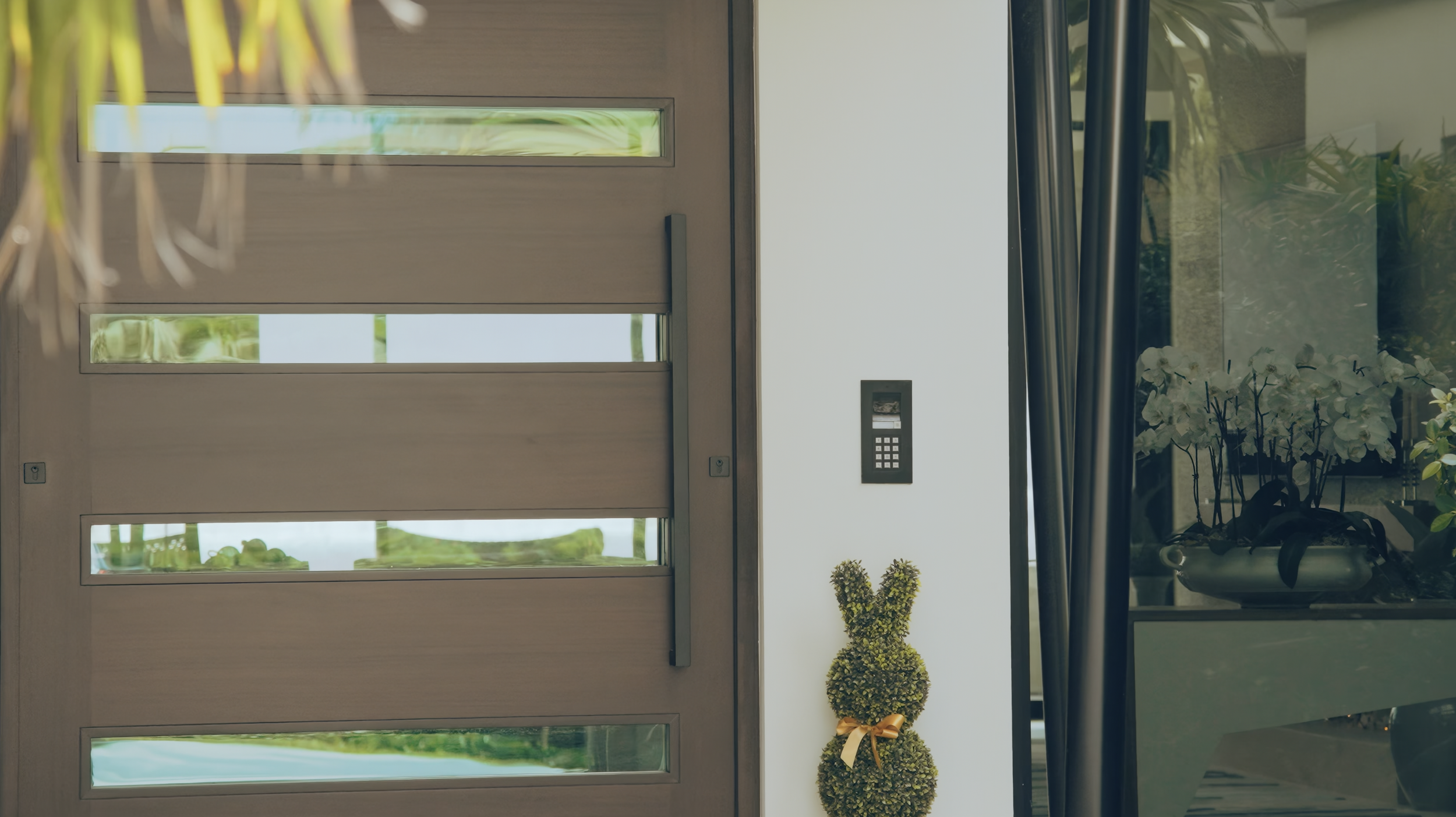
Video intercom at the entry and gate
Remote access from phone, touchscreen, or television
Network design and segmentation, so cameras don't sit on the family network
New Construction and Existing Homes
If you're building, camera and intercom locations belong in the drawings like the conduit to the gate, power at the eaves, and an equipment location with real ventilation. These are inexpensive at framing.
If the home is finished, most of a system can be retrofit. Existing structures limit some cable paths, and coverage design works around them.
A note for seasonal residents: homes that sit empty for months are a different design problem than homes that don't. Remote verification, water and power monitoring, and someone local who answers the phone matter more than camera count.
Common Questions About Home Security
-
Fewer than most quotes suggest. It depends on approaches and sightlines, not square footage. A survey answers it in an afternoon.
-
Locally, on equipment in your home, with retention you choose. Cloud backup is available as a second copy, not the only copy.
-
Yes, from a phone or tablet anywhere. That's often the primary use for clients who are away part of the year.
-
Not necessarily. Some clients want it, others prefer self-monitoring with alerts. Both are supported, and it's a decision you can change later.
-
Yes. Individual credentials, with schedules and a record of who came and went.
-
The right ones will. Coastal properties need hardware specified for the environment, and it's one of the more common failures we're called in to correct.
Where We Work
Designed and installed from two offices — West Palm Beach, serving Palm Beach, Jupiter, Boca Raton, Delray Beach, Boynton Beach, Palm Beach Gardens, Wellington, Royal Palm Beach, and Juno Beach; and Vero Beach, serving Vero, Sebastian, Stuart, Palm City, Jensen Beach, Port St. Lucie, Hobe Sound, and Martin County.
What Would You Want to Be Able to Check?
Tell us about the property — the approaches, the gate, what you'd want to see from away. We'll tell you where we'd start.