
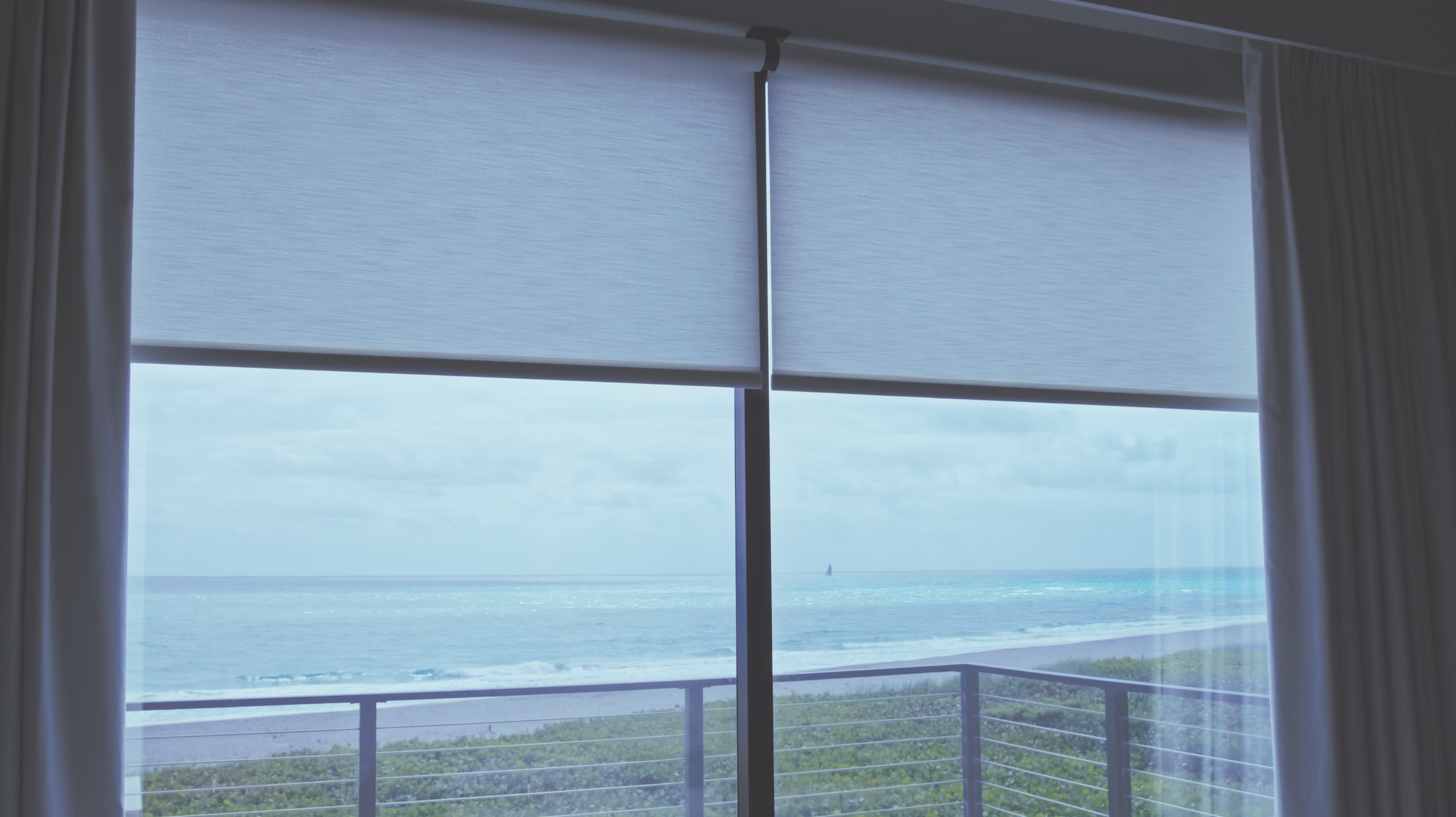
Motorized Shades and Window Treatments
Large expanses of glass are common throughout South Florida. They bring in daylight along with glare, solar heat gain and UV exposure. ETC Florida designs motorized shades that manage each one and provide privacy when needed. Shade fabric, pockets, power and controls are planned as one system.
Florida homes are built to be open. Wide glass, high ceilings, water on one side and morning sun on the other. It's the reason people build here.
It's also the reason the living room is unusable from two until five, the television washes out every afternoon, and the rug by the window is two shades lighter than the rest of it.
Shades solve that. Motorized shades solve it without anyone having to think about it.
What Motorized Shades Handle
Afternoon glare on televisions and screens
Heat load through west and south-facing glass
Privacy on ground-floor and waterfront rooms after dark
UV fading on furniture, art, rugs, and wood floors
Windows too tall, too wide, or too high to reach
Whole rooms of shades that would otherwise be adjusted one at a time
Shades That Move on Their Own
The difference between a motorized shade and an automated one is whether anyone has to remember it.
A motorized shade responds to a button. An automated shade responds to the sun by tracking its position through the day and adjusting before a room gets uncomfortable, then opening again when it doesn't need to be closed.
In practice, that means the house handles the afternoon without being asked. And on the days you want it different, one press overrides everything.
How We Design a Shade System
We start with orientation and glass
Which direction each window faces, what the glazing is, and when the sun reaches it. That determines fabric, opacity, and schedule long before anyone picks a color.
We select fabric for the job the room is doing
Solar shades preserve the view while cutting glare and heat. Blackout works where sleep or screens require it. Drapery softens a room and does acoustic work most people don't expect. Many rooms use two layers.
We plan the details into the architecture
Recessed pockets, ceiling channels, and matched fascia let the hardware disappear into millwork or drywall. On new construction those are drawings-stage decisions.
We coordinate with lighting and the rest of the system
Shades, lights, and climate should respond to the same moments. Evening means the shades come down, the lights come up, and the air handler stops fighting the glass.
What a Shade System Includes
Window survey, orientation study, and solar tracking
Fabric, opacity, and color selection with your designer
Motor selection that hardwired or battery-controlled, depending on the build
Pocket, channel, and fascia detailing coordinated with the drawings
Keypad, app, and scene control
Drapery tracks and layered treatments where appropriate
Integration with lighting, climate, and whole-home control
New Construction and Existing Homes
If you're building, shades belong in the drawings. Recessed pockets and hardwired motors require framing, blocking, and power at the head of the window.
If the home is finished, battery-powered motors have made retrofit straightforward. They install into existing openings, run for years between charges, and require no wall work in most homes.
Common Questions about Motorized Shades
-
That depends on when we're involved. New construction can hide everything in a pocket. Retrofit uses a fascia or cassette matched to the window trim, which most people stop noticing quickly.
-
Typically two to five years depending on shade size and how often it moves. Larger and heavier shades are better hardwired where the build allows.
-
Quality motors are quiet enough that a conversation continues over them. The difference between a premium motor and an inexpensive one is mostly audible.
-
Yes. Keypad, remote, app, and voice all work, and a manual override is available.
-
Yes. Motorized drapery tracks are common, and layering a solar shade with drapery is one of the more effective combinations in a Florida home.
-
Interior shades are a comfort and light system, not a storm system. Impact glass and exterior protection are separate — we design around whatever the home already has.
Where We Work
Designed and installed from two offices — West Palm Beach, serving Palm Beach, Jupiter, Boca Raton, Delray Beach, Boynton Beach, Palm Beach Gardens, Wellington, Royal Palm Beach, and Juno Beach; and Vero Beach, serving Vero, Sebastian, Stuart, Palm City, Jensen Beach, Port St. Lucie, Hobe Sound, and Martin County.
Which Rooms Do You Avoid in the Afternoon?
Tell us which windows are the problem, or send the drawings if you're building. We'll tell you what we'd do first.