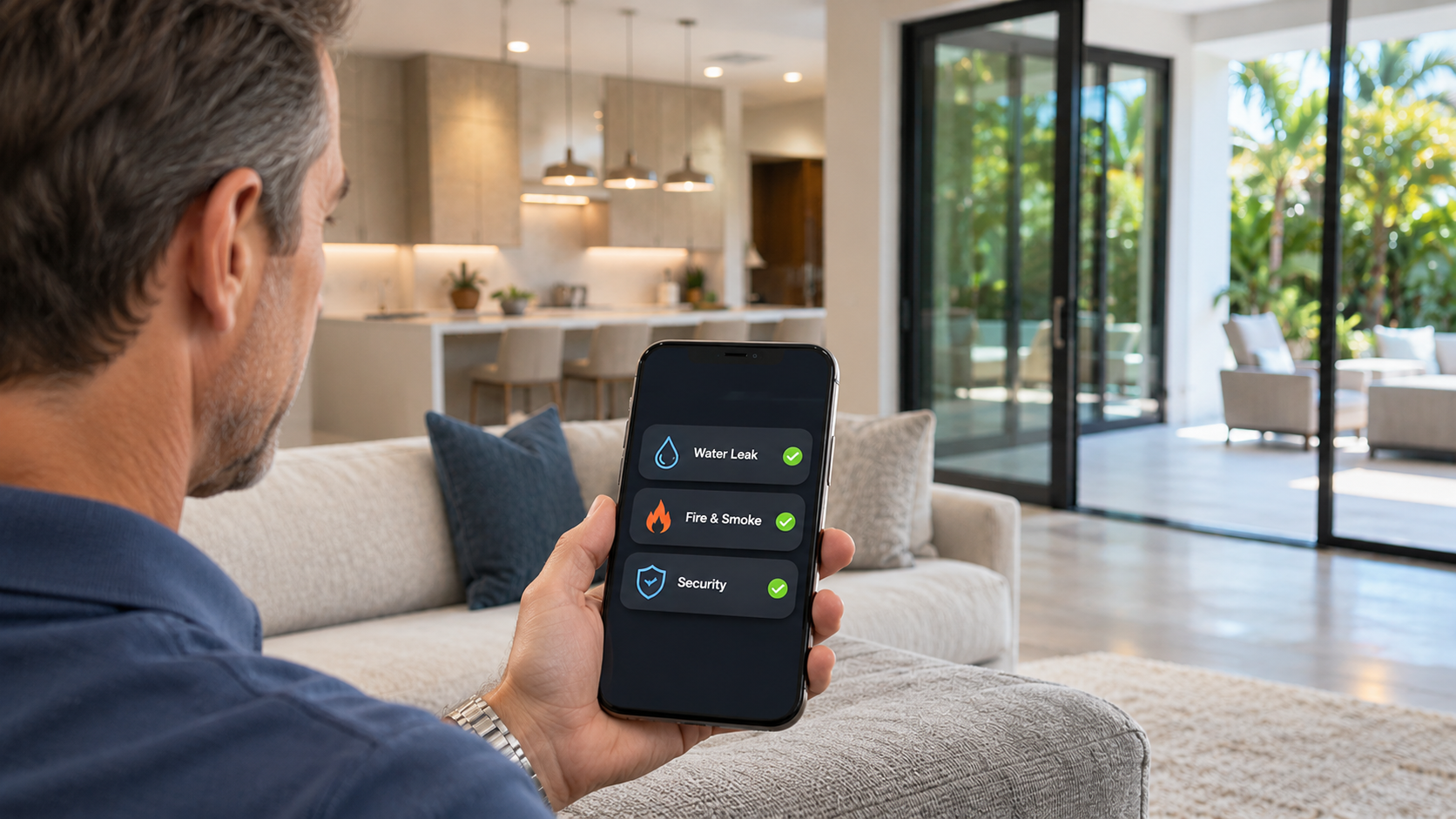
The difference between a smart home that records a problem and one that prevents it is whether the devices can act. A leak sensor alone sends an alert while the water keeps running. Connect it to an automatic shutoff valve and the house stops the water itself. The same principle applies to fire, electrical faults and security: the systems that prevent losses are the ones that respond within seconds, whether or not anyone is home.
Homes today can respond, not just record. The biggest change in home technology over the past few years is not any single device. It is that devices now talk to each other and to the homeowner. A camera, a door lock and a thermostat once worked on their own. Today they can operate as one system that alerts your phone, notifies a monitoring center and responds automatically.
Our team has designed and serviced home technology in South Florida since 1987, and the homes we see protected best are rarely the ones with the most devices. They are the ones where the devices work together and do something useful when a problem appears. The best smart home does not need to announce that it is smart. It simply reacts the way you would if you were there.
What is the difference between detecting and preventing a problem?
A detection device tells you something is wrong. A prevention device does something about it.
A water leak sensor on its own is detection. It sends an alert, but the water keeps running until someone acts. Connect that sensor to an automatic shutoff valve on the main line and it becomes prevention, because the home closes the water before the damage spreads.
Smart breakers work the same way for electricity. They monitor power throughout the house and can shut off a circuit when its readings look abnormal. When you are choosing technology for protection, this is the first question to ask of any device: will it only tell me, or will it act?
Why is water the place to start?
Because most water damage starts small and grows with time. A slow drip or a failed supply line can run for days before anyone notices.
Leak sensors belong wherever water and appliances meet: under sinks, behind the washing machine and refrigerator, beside the water heater and at the air conditioning air handler. In South Florida homes, where air conditioning runs nearly all year, a clogged condensate drain line at the air handler is one of the most common problems our service team sees.
An inline flow monitor on the main water line adds another layer. It learns the home's normal water use and flags anything unusual, such as water running for hours in the middle of the night.
Together, these create a home that senses a leak and shuts off the water until someone can check on it. If you are home, the lights can blink or change color to get your attention. If you are away, the alert arrives on your phone and the water is already off.
How does connected technology help with fire and carbon monoxide?
What matters most is whether anyone hears the alarm. A standard smoke or carbon monoxide detector only helps if someone is home and awake.
Connected detectors, especially those tied to a professionally monitored system, send the alert to your phone and to a monitoring center that can dispatch help whether you are home or not. Inside the house, the same alarm can turn on the lights to show the way out, unlock the doors and shut down the air handler so smoke is not pushed from room to room.
Smart breakers help before a fire ever starts. By watching how much power each circuit draws, they can shut one down when something looks wrong, addressing an electrical problem before it has the chance to become a fire.
Which security technology actually prevents a loss?
The devices that prevent a loss are the ones that respond, not just record.
Professional monitoring is the foundation, because a trained person verifies the alarm and sends help. Cameras are most useful when you can see and speak to someone in real time, and pairing them with lighting turns them into a deterrent rather than a recording. Motion activated exterior lighting is one of the simplest deterrents there is, since most intruders do not want to be seen. Smart locks close one of the most common gaps of all, the door someone forgot to lock.
Even shades can play a part. When they rise and lower with the sun, the home looks lived in during the day and stays private at night. Combined with monitoring, alerts and integrated lighting, security becomes something the home does on its own. Some systems can now even send a drone to investigate an alert, giving you and local authorities a live view inside or outside the home while you are away.
Which homes benefit most?
Seasonal and second homes benefit most, because in an empty house a small problem has weeks to become a large one. Remote monitoring of temperature, humidity, power, water and security means owners learn about a failed air conditioner or a leak right away, not months later. Often a service team can resolve the issue before the owner ever notices.
Hurricanes are part of life here. Remote monitoring lets families who evacuate check on their home from wherever they are, and backup power for the network and security system keeps that information coming when the power goes out.
Older homes benefit too. Wireless sensors and devices can add monitoring and security without opening walls.
The same technology is beginning to protect people as well as property. For a family with a parent living on their own, a bed sensor can send an alert if they have not gotten up in the morning or did not return at night, and floor sensors can detect a fall.
How should you choose where to start?
Start with your home's biggest risk, not the most impressive device. For many homes that is water, and a few well placed leak sensors with an automatic shutoff valve will do more than a house full of gadgets.
Know which devices only alert you and which act on their own, then decide how much automatic response you need, especially if you travel often or spend part of the year away. Choose products that work together on one platform, because five separate apps tend to be ignored.
Finally, think about who will maintain the system. A battery powered sensor or camera is an easy project to do yourself. A monitored security system, smart breakers or a water shutoff valve are worth having professionally installed and serviced, because they only protect you if they work on the day they are needed.
Frequently asked questions
What is an automatic water shutoff valve?
A motorized valve on the home's main water line that closes when a connected leak sensor or flow monitor detects a problem, stopping the water until someone checks.
Where should leak sensors go in a Florida home?
Under sinks, behind the washer and refrigerator, beside the water heater and at the air conditioning air handler, where clogged drain lines are a common cause of leaks.
What do smart breakers do?
They monitor the power each circuit uses and can shut a circuit off when readings look abnormal, helping prevent electrical fires.
Can I monitor my home during a hurricane evacuation?
Yes. Remote monitoring shows temperature, water, power and security from anywhere, and backup power for the network and security system keeps the information flowing during an outage.
If you are not sure where your home is most exposed, our team in West Palm Beach and Vero Beach would be glad to walk through it with you and recommend where to begin.